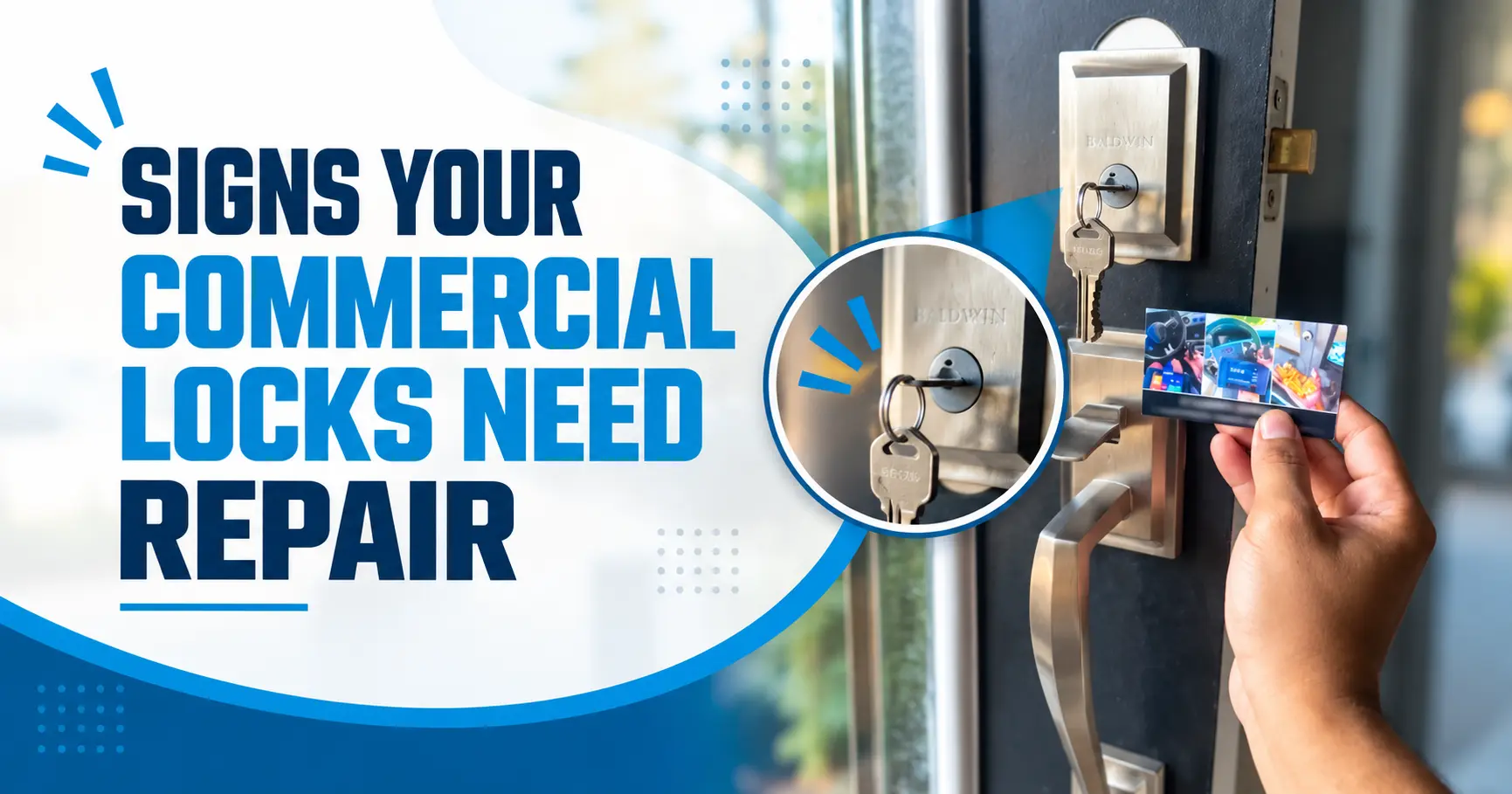
Commercial locks help protect your building, staff, and equipment. However, worn or damaged locks can put your property at risk.
You may notice a key that sticks, a loose door handle, or a lock that makes strange noises. These small problems may seem harmless, but they can make it harder to secure your workplace.
Waiting too long to fix a faulty lock can also lead to lockouts and security concerns. You can avoid these problems by spotting the warning signs early and contacting a professional for commercial lock repair service when needed.
Why Commercial Door Locks Fail Faster Than Most Businesses Expect
Commercial door locks often handle far more activity than residential locks, turning dozens of times a day as staff, deliveries, and visitors move through the building. That constant use wears down mechanically, even when the lock appears to work normally.
Unlike standard residential hardware, commercial hardware needs attention years before anyone expects it, especially in busy workplaces where daily wear can quickly affect reliability and security.
Learn the nine signs your commercial locks need repair and know when to take action to keep your property secure.
1. Keys Stick, Jam, or Won’t Turn
You may notice keys sticking or jamming in the lock, or find that keys are difficult to turn when opening your business. When a key gets stuck in the lock, dirt and debris buildup inside the lock may be the cause. These sticking lock problems can also indicate a damaged lock cylinder or worn internal components.
Cleaning and lubricating the lock may help, but an out-of-alignment lock mechanism may need a locksmith’s attention. Routine commercial lock maintenance helps you spot these issues early and keep your doors working as they should.
2. Lock Damage, Rust, or Weathering
Check your business doors for visible damage to lock hardware, rust and corrosion on locks, or cracks, dents, or a loose handle. Weather-damaged lock hardware can weaken the lock structure over time. NIST historical corrosion research used a salt-spray test with a 5% sodium chloride solution at 95°F for 624 hours (26 days), and rust appeared along exposed edges during testing.
A damaged strike plate or deadbolt can signal attempted forced entry, so arrange commercial lock repair and replace worn lock components as needed. To protect your doors from future damage, upgrade to weather-resistant commercial locksets.
3. Strange Noises from the Lock
Strange or unusual noises from the lock, such as grinding, clicking, or straining, can signal trouble. These unusual sounds when using the lock may mean the lock is making strange noises and is a sign of a lock problem. If you hear these sounds often, a locksmith should check the lock.
4. Loose Lock or Door Handle
A loose or wobbly lock mechanism may mean the lock feels loose in the door because of worn screws or internal components. A shifting lock mechanism can increase the risk of break-ins, especially if the lock stops working properly. OSHA guidance says machine guards must be strong and securely fastened so they cannot come loose, and you should address loose door hardware by contacting a professional locksmith.
5. Misaligned Latch or Deadbolt
Check whether the door does not close properly or the deadbolt requires lifting the handle to engage. Misalignment between the lock and the door frame is common in commercial buildings with heavy foot traffic. Building settling and temperature-related expansion and contraction can also affect door fit. When the latch or deadbolt is misaligned, the door may offer very little resistance to forced entry. A locksmith can help by adjusting the strike plate, realigning the door, or retrofitting the latch.
6. Employee or Tenant Changes
Employee turnover, vendor changes, and office relocations can create security risks for your business. Without a record of who has keys to your building, an access control failure can occur. Set a clear key management protocol to track key copies and prevent unauthorized duplication.
These steps help reduce security risks for small and mid-sized businesses, especially during staff turnover or when dealing with ex-employees or former tenants. A restricted keyway system or electronic access control can also help you manage who enters your building.
7. Staff Get Inconsistent Results
You may notice inconsistent results when staff members struggle to lock or unlock the same door, which can point to a problem rather than user error. Commercial locks should be predictable, so inconsistent operation may mean parts are wearing unevenly, or the door is out of alignment.
8. Too Many Untracked Keys
You face a security risk when duplicated or unaccounted-for keys make it unclear exactly how many keys exist for a door. Anyone who’s ever had a copy made, tracked or not, may still have access, making it harder for you to account for every key. Reviewing your untracked key count can help you identify access gaps and decide whether rekeying is necessary.
9. Outdated Locks or Inadequate Security
Some commercial properties still use outdated locks or ones that don’t meet current security standards, such as older pin tumbler locks, worn master key systems, and low-grade deadbolts.
These locks may have vulnerabilities in older lock hardware that modern bypass techniques can exploit. FBI data show 823,910 burglary offenses were reported in the U.S. in 2024, with a national burglary rate of 229.2 incidents per 100,000 inhabitants.
A qualified commercial locksmith can inspect low-security or worn commercial locks, find faults, and repair damaged parts to help meet current commercial security standards. If repairs aren’t enough, consider high-security deadbolts or smart lock systems, and check your commercial lease agreements before replacing the locks.
When Professional Service Is Needed
You may need a licensed locksmith when a lock problem goes beyond a simple adjustment, particularly with an integrated access control system or a mortise lock body that requires internal repair. Some jobs require specialized tools, while Master key system rekeying may require specific knowledge of the existing setup.
For fire-rated doors, professional help becomes even more important when the fire-rated door has a label or listing in question. You may also want to contact the lock manufacturer’s service team when the hardware requires manufacturer-specific support or the repair could affect system operation.
Need Commercial Lock Repair in Riverview?
Faulty commercial locks can make it harder to keep your business secure. Don’t wait for a small lock problem to get worse. A1 Locksmith Services LLC provides commercial lock repair services in Riverview to help fix worn, damaged, or faulty locks. Contact our team for commercial lock repair service and keep your business doors working properly.