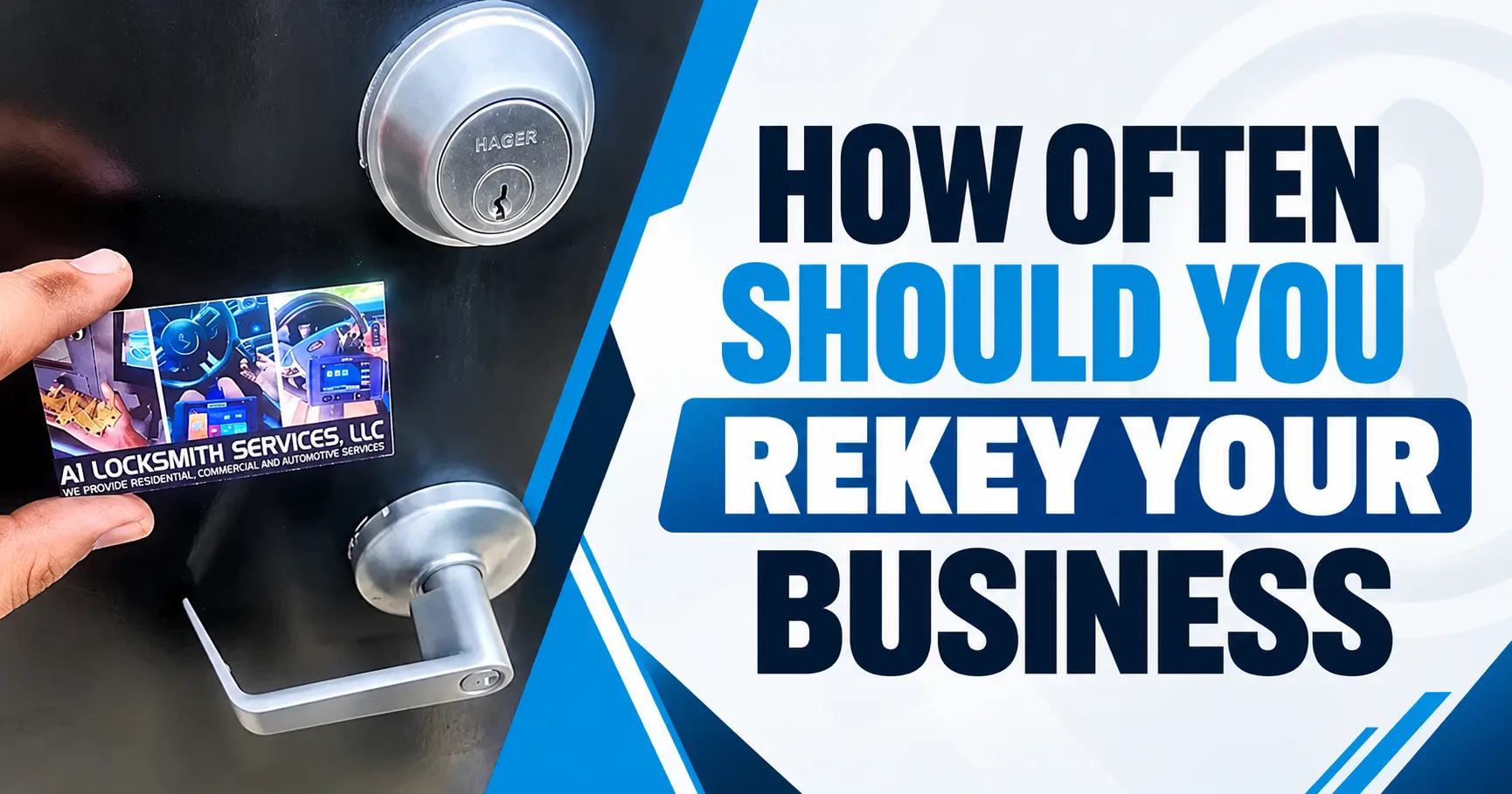
One old key can still give someone access to your business long after they no longer need it. So, how often should you rekey your business? Waiting until a key goes missing, an employee leaves, or a break-in occurs can leave you unsure about who still has access to your property.
A clear business lock rekeying plan helps you stay in control of your keys and decide when to change access. From staff changes and lost keys to repairs and yearly security reviews, knowing when to rekey your business helps you manage who can enter your workplace.
What Does Rekeying Actually Mean?
Missouri State University defines rekeying as changing a lock’s internal mechanism so a different key operates it. In practice, business key rekeying involves changing a lock’s internal mechanism by adjusting the pins inside the lock cylinder, so the same lock hardware works with a new key and old keys no longer work.
Compared with replacing the entire lock system, this process is often faster and more affordable, giving you full control over who can access your property while allowing you to manage key duplication and cutting for authorized staff.
When Should You Rekey Your Business?
Your business keys may be in more hands than you realize, leaving you unsure who can still enter. Learn which changes and security concerns may mean it’s time to rekey your business.
01. When an Employee Leaves
One of the most common reasons to rekey business keys is employee turnover, especially when a former employee had access to your workplace. Even when former employees return their keys, you cannot be sure they didn’t make duplicates, so businesses with higher-than-average turnover should rekey their locks when key access leaves the company.
To prevent unauthorized entry and protect sensitive information and assets, rekey the locks immediately so only current, authorized personnel can enter specific areas or the entire building, depending on your master key system and commercial rekeying needs.
02. After Lost or Stolen Keys
Lost or stolen keys pose a serious security risk, whether misplaced or unaccounted for, because they may allow unauthorized entry to your business premises. The University of Texas System requires lost or stolen keys to be reported within 24 hours and assesses whether the resulting security risk requires rekeying.
To reduce this risk, follow clear key-control policies by auditing who has keys and ensuring every key is accounted for. Trying to locate lost keys and cut replacements quickly may not stop someone from gaining access, so rekey your locks when needed.
03. After a Break-In or Security Breach
After a break-in or attempted break-in, rekey immediately, especially if keys or access codes were compromised or an intruder used force entry. Rekeying restores security by addressing immediate security vulnerabilities, while reviewing your current lock system can help prevent future incidents.
Consider upgrading to high-security locks or electronic access control systems that track who enters and exits your building, so anyone who should not have access no longer does. Taking these proactive steps can restore peace of mind and support the safety and security of your business premises.
04. Change in Management or Security Staff
When new managers or security staff take over, regular rekeying is essential to keep key access under control. Rekeying helps ensure that only current, trusted employees can access your business premises.
05. After Renovations or Repairs or Vendor Access
After renovations or repairs, contractors, cleaners, and vendors working in your building may have had temporary access to your property. Once you complete renovations, rekeying after projects is a smart precaution that adds a layer of protection when multiple people have had temporary access and helps ensure no extra keys go unaccounted for.
06. When You Move Into a New Space
When renting a new office or buying a retail location, even if the space is leased, rekeying should be your first move because you may not know how many keys previous owners, tenants, employees, contractors, cleaning crews, maintenance workers, or property managers made. Even if everything seems fine, rekeying helps you take control of access from day one.
07. If too many people have copies
Keys can get passed around when a manager makes a copy for an employee, someone needs temporary access, or a former worker forgets to return theirs, leaving you unclear how many keys are actually out there. After years of key copies, staff changes, vendor access, and shared entry points, rekeying can help reset everything and restore control over who can enter your business.
08. Annual Security Review
A yearly security review is routine maintenance and a Preventive Measure for your business’s safety, as unauthorized access can leave your business vulnerable, especially when you handle sensitive information in law firms, medical offices, or financial institutions. The University of Georgia conducts annual key-account audits to confirm keys are present, verify access remains necessary, and confirm secure storage, so you don’t need automatic yearly rekeying.
Use this security assessment to set a regular rekeying schedule, such as periodic preventive rekeying every one to two years, to maintain control over who has access and ensure old keys don’t remain in circulation; high employee turnover, high-turnover industries, and the rotation of contractors and vendors may call for shorter intervals between rekeys to keep your rekeying schedule up to date and secure.
Why Rekeying Is a Smart Security Measure
For business owners, rekeying is a simple, cost-effective solution that offers big security benefits, as replacing locks can be costly and rekeying is a budget-friendly, property-secure, effective approach. It helps you maintain control over access to your property, while a commercial locksmith service can guide you on when to rekey your business locks.
Take Control of Who Can Access Your Business
Lost keys, staff changes, or an office move can leave your business open to unwanted access. A1 Locksmith Services LLC provides commercial locksmith services in Riverview, FL, to help you manage key access for your business. Contact us to discuss your business rekeying needs and keep access limited to current, authorized personnel.